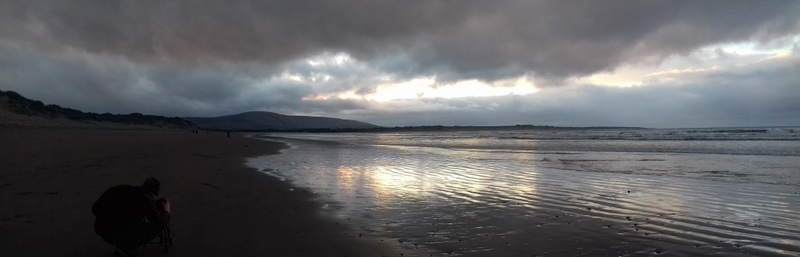
Immobile
New Ross, 8/07/2019
Yet I think
Yet I move
Yet I go
Immobile
Racing heart
Along the marsh
Immobile
Flying mind
Immobile
But I am gasping for some air
I can’t breathe
I lost my bearings
Desires are crawling
In a hurry
Pounding in my hand
Without finding their way
Immobile
I’m losing my water along the water
Immobile
I am waiting
Immobile I am running
After four hanging days, two more hours of wait at the mechanic including fifteen improvised poetic minutes and our ABS light unwilling to turn off, the car is finally healed. I leave at midnight GTM +2 towards Cherbourg for the shortest road trip ever… There will be no trip, only the road!
Yet, everything has been perfectly dreamt even if we didn’t have any thorough plan. I wanted to say goodbye to my last companions road after road. I wanted to experience every step leading me from Toulouse to Cherbourg. But the clutch held strikes like a vicious way to scold me: ones shall not leave in a hurry! I lived my two last French weeks in such a fervor. My whole energy tended to go properly, to share one moment with each one, to carefully leave every place, to feel my heart squeezing of those far goodbyes. Days ran, feverish and happy; nights flew, sleepless and busy ; to lead me to a boat for a new life. But you can’t go if your heart is fast-forwarding nor if you blood is racing, you need to put every nut in the right place so you can properly tighten your muscles to softly soar. Thus my loyal car taught me one last farewell lesson and we, night birds, pick up pace to reach the port in time.
We drive for fifteen hours from midnight to the next afternoon. We go with the new moon for a new beginning. We change the chauffeur every two hours in a perfect engineering: a pilot, a copilot and a sleeper. We stop for two hours in the middle of the night and thunder strikes and gets us blind. We sleep in this weird travelling promiscuity, the three of us overcrowding in such a small improvised space, where sleep thankfully wins over comfort. We drive along the D Day beaches and one’s random poesy greets Americans that both freed us and brought gums to France in 1944. We get right in time for the check-in. Life’s clock is tidy.
The boarding quay is so quiet and peaceful, people fleetingly and silently intertwined at the modern port’s bar. Premises don’t crawl with loud sailors of my romantic adventure films memories, it doesn’t smell like a fish market nor nauseating Atlantic boats scorbutic. Yet, when we open the car’s window for the first time, it smells seaweed and salt like Mediterranean Sea would never exhale. Sea smells crossed over historical eras, plastic bags pollution hasn’t stolen it yet. No maters centuries or seasons, Cherbourg will always have the smell of the Channel that leads you to British Islands.
Then comes the last goodbye relentless moment. I am going on a long trip and I don’t understand yet. See you soon my friends, I will miss you all so much, but I deeply know I am right to go in order to become a better version of who I already am.
I dreaded this boat journey so much after our Dantean return from Sardinia. This time, I’m prepared for this seventeen hours crossing, I take my magic potion for seasickness and play with the wind as I gaze at the fleeing French shores, at this French land that I won’t see in months.
I wake up early, on universal waters, at 7.00 or 8.00 depending whether I’m Irish or French, and I couldn’t observe sun setting nor rising. I fell asleep in the dark cinema room for what I didn’t know to be my night. I was taken by surprise. Twelve hours of such a deep sleep, so perfectly in place despite my body torn in uncomfortable equipments. I don’t know if I was awfully tired or particularly sensitive to my seasickness remedies.
Now, crossing is almost over, I almost haven’t lived through it. I enjoy nonetheless my last moments on the Celtic Sea. I travel with WB Yeats and the hazy horizon is the first glimpse I got of Ireland, I can’t see her land but the blurry fog speaks for her, I recognize her with all my heart. I share my body in between sunny windows and wild wind on Drumcliff promenade, Irish land slowly gets closer, I can see uneven mounts and wind turbines blowing towards us.
The boat finally lands me in Dublin, when I am staying in New Ross, county Wexford, three hours of bus from Dublin instead of a forty five minutes driving from Rosslare that lands French travelers as well. But while my bus is both showing sunny Ireland over my windows and driving me down along the banks I saw this morning, I smile of my messy travels. My Irish journeys always defied common senses, I turned around myself, I took useless detours and I stopped where I shouldn’t have. It is probably the beauty of my memories. A messy non-sense. And it is like Dublin was always my necessary gate to introduce any Irish piece. Yet, I would have loved to land in Cork like the first time.
I drink my first Irish pint of Smithwicks and everything is in its perfect place on Earth! Or at least in Justine’s little world. The garden view room that will host my writings is absolutely adorable. Tourists horde hasn’t invaded Ireland yet and my look on Barrow River almost meeting the sea is ideal.
Since I am slowly starting my travels in familiar lands, I can’t utterly reckon that I am going for a long time, that a new era begins. Good for me, I am here to start or to finish my departure. My mind is floating, too powerful, too changing, impossible to write it down on paper. Frenetic of what is coming for me, I’m impatient. Ardent and quiet. I follow the river’s course, even when it doesn’t flow towards my desire because building a dam would only stop the water for a short while, but it will never drifts its run. Thus, I welcome what I know of this Irish stay: choosing my words carefully to feed my multiple writings.
I get on with the North disaster, with my novelist pages that I have tried to intertwine for weeks, I needed to recognize my characters, to have a drink with them and remember who they were.
However, soon, something strikes me: I don’t feel the same eager to write my war novel than in my sedentary French life. Even walks that usually unleash my imaginations don’t work: my mind is already gone, dreaming to other mysteries. I still want to tell the intermingled destinies of my four broken lives north of The Boyne, but not today, not now. My dead line is always late, this endless work sometimes discourages me, and I can feel Brigid, Alistair, Deirdre and William will have to wait a bit more before running on paper. Thus, my Irish stop’s fate drifts a bit, I explore this unknown part of Ireland and I am glad to know I will have four loyal travel companions, made of papers and words, following my international wanderings.
Thus, I meet Kay, my Irish days hostess, for our first (but not the least) shared excursions to a Sunday second-hand market. She tells me her life in technicolor. Kay was the middle child of a ten children – including three pairs of twins – Irish family. Kay studied psychology and nursing in England. Kay spent most of her life out of Ireland because she traveled a lot across oceans, but mostly because she settled over seas. Kay left Dubai a year ago, she went home to take care of her older sister who is ill. But because Kay loves to be on the move and her playful character doesn’t get along with Irish austerity, Kay changed her sister’s house into a Bed & Breakfast a couple of months ago. Since she can’t travel the world, the world will come to her: Kay welcomes weekend travelers, weekly explorers and year-round workers.
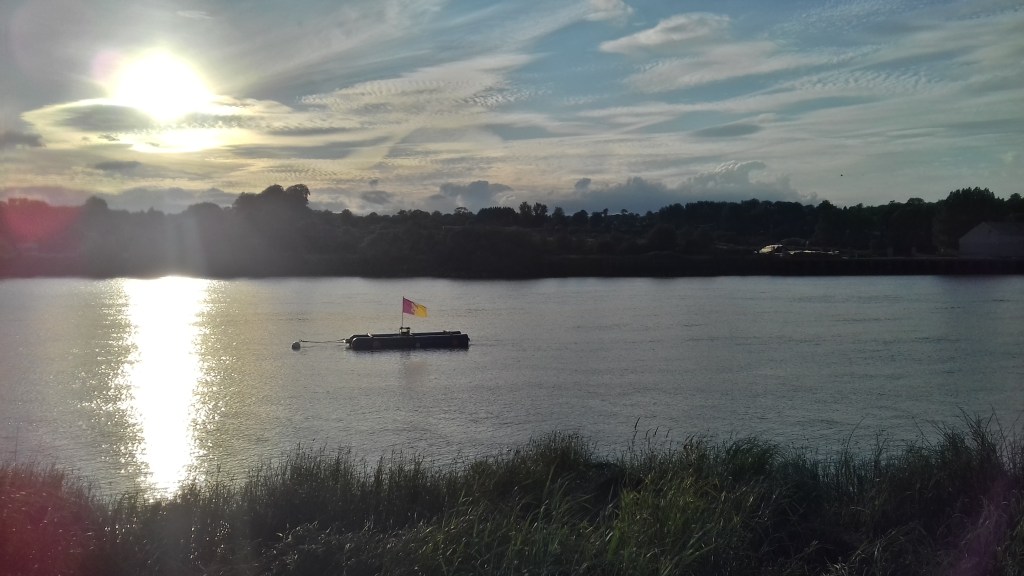
Thus, I walk the small town I have chosen: New Ross. Port built by the Normans in the 13th century, one of the most violent 1798 Insurrection battles took place here. English troops establish their headquarter within New Ross free walls that Wexford newly self-appointed Republic hasn’t claimed yet. When pikes men finally besiege enemy garrisons, they don’t have enough ammunition to be victorious and they are massacred by both English canons and rifles. Freedom doesn’t have time to win, bloody streets only lie with rebel corpses, later thrown in Barrow River flows without being blessed.
I laze along this grave marsh as the wind disturbs music in my ears. I forget shameful history and I let immobile changes be mine. I feel like I’m breathing differently, like I build my mind in a different way, not only compares to the last three years that have blown up my whole world, but compares to my whole life. Last year, as I was putting my broken pieces all together, I could feel each healing and how it fragilely and hopefully changed me. Today, this new breath is like the ultimate completion of my implosion, the deep transformation finally comes true.
My first Irish summer changed something inside me, I felt completely different. Totally open to a new version of myself. Today, hindsight, I realize I only unbolted; which, at that time, was already big. Today, I feel like I kicked the door and I can tell my freedom today has nothing to do with my freedom back then. However, it would be arrogant to pretend I reach the optimal freedom or to deny the genuine change I went through three years ago. Maybe this how I change my look: I don’t judge hindsight but in looking at the moment’s truth. Then, I felt utterly free and it was true. Today, I feel freer. And it is true as well. And maybe in a year, I will laugh that weak freedom such much more powerful it will be then.
Life serendipity is always so amazing! I wake up, willing to explore, hitchhiking or by foot, around Hook Peninsula shores or at Waterford banks… and I am somehow full of doubts all of sudden, until Kay offers me a ride on Hook loop like she was reading my mind! And what a wonderful day with Kay under lunatic Irish sky!
Her lovely tiny red car drives us through beautiful random. We meet one of her acquaintance, Roisin, whose house is blown by Duncannon sea and at whom we pick roses, lavender, lettuces and two beautiful radishes to entertain my salads. Roisin tells us foolish stories, inserted with chats with Sam her dog. She rages about her agonizing coast because it became summer Dubliners’ resorts, so desert the rest of the year they closed down the last pub, and every tiniest village is proud of its pub and church! Roisin is the perfect Irish: generous and talkative.
Kay and I then stop at Templars Inn gazing at the sea and some Irish ruins for our lunch time. Kay tells me more about her travels over the world with her husband and three sons, she tells me her rebel character in a very traditionally Irish family, she tells me her childhood in her parents’ village pub. She shares a few anecdotes about her big sister that we, boldly but always nicely, like to call the Queen Mother. Shy and modest because of her illness, Peggy is a mysterious shadow in Barrow View house, not everybody can meet her and I have to wait for a week to know the great honor of greeting her. Like Queen Elizabeth II in Buckinghman, not everybody is allowed in the Queen’s chambers.
And our meal ends with Kay’s generosity, despite her long exile she hasn’t lost her Irish type and invites me for lunch.
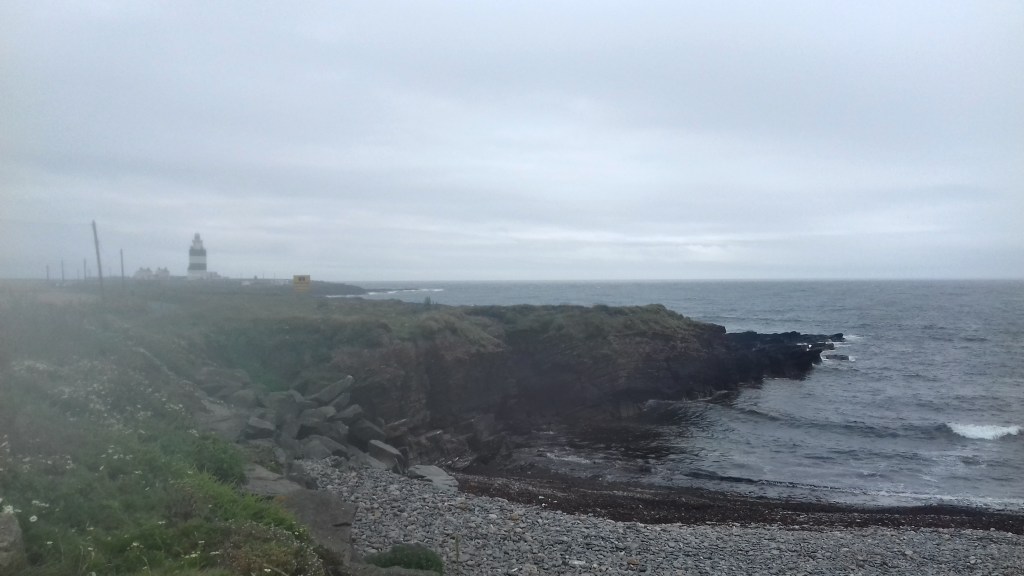
We go back to our wanderings as rain turns to wet and blind clouds, I get a glance of the oldest European lighthouse, I cross Campile’s way, the village mistakenly bombed by the Germans in 1940. And I go home, perfectly fulfilled of this happy escape.
I am away from home and yet I stand still. I know Ireland so well now, I can perfectly and utterly feel at home here, with all the daily happy routine and the glad fixity it means. I spend days within my garden view room, preparing my future journeys always closer to the poles, running words from my paper to my screen, from my mind to my pen.
When I don’t spend days exploring with Kay…
By a rainy day, we visit Kennedy Homestead and museum. Panels tell JFK’s great-grandfather emigration from New Ross port on the Dunbrody Ship, archives show his descendants’ American destiny, showcases testify of the president’s visit to his Irish cousin, Mary Ryan, a few months before his death in 1963. Kay confesses to me she related to the departed president: Mary Ryan was Patrick Kennedy’s sister, and he was married to Kay’s aunt. She is not blood related but still, because she was part of the family, she remembers dressing up with her nine siblings and waiting on their doorstep that Kennedy greets them as he was driven over the place.
By a foggy day, we land on Bannow Bay where the first Normans landed too in 1169. Indeed, I discovered this being in this totally unknown Ancient East: I am standing on the lands that suffered the most terrible Irish destiny upheaval. Even if my novelist writing about the Troubles slowly abandon me, I am where I shall be, I am where roots the Northern province’s disease. Everything started here, the Irish sorrow, the Ulsterian tragedy.
By a grey sunny day, we drive to Wexford, Viking timber town. We are greeted by the pikes men, those who freed this tiny piece of Ireland for a fleeting moment in 1798. The United Irishmen is completely dismantled by English spies during the national meeting in Dublin, but Wexford delegation doesn’t make it because, according to old wives tales, the envoy would have stopped at the pub and surrendered to a charming lady’s charms. Thus, the town self-declares free and leads the most feverish battles of the rising. Untamed headquarter whereas towns nearby surrender to English power after the awful Vinegar Hill Battle, leaders show their authority, as oppressing as their oppressors, avenging their rebel companions buried in Barrow River current, skewering suspected loyalists on Wexford Bridge.
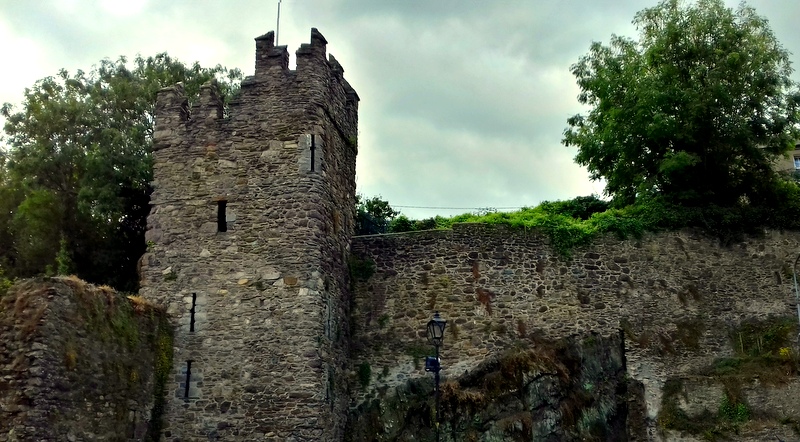
And in the middle, I am led to Waterford by opportunities. Organized between a Viking triangle and the Anglo-Normans district, it is the oldest Irish town. Settled by Vikings in 914 (easy, anytime it ends with a “ford”, it means the city was born from Northern warriors’ weapons), it becomes the Kingdom capital for two centuries until Normans’ arrival at Dermot Mac Murrough’s request making him the most hated figure in Irish history. Indeed, the dispossessed King of Leinster asks Henry II of England to help him winning his lands back. Henry sends Strongbow who bargains his weapons in exchange of Dermot’s daughter, Aiofe, and being named heir of the throne. This is the bitterest burnt Irish could never stand over their tormented centuries: they invaded themselves!
In 1169, Normans knights land, Strongbow steals Waterford and the King’s daughter, and Mac Murrough gets his throne back. For a short time, alas, because he dies in 1171, and his son Donal claims Leinster throne in accordance with his rights under the Brehon Laws. But Strongbow can have the same claim because of his marriage with Aoife and Henri II, alarmed by one of his nobles’ growing power, lands Irish shores in 1171, applying his King stamp on Strongbow’s invasion. Then, like certain revolutionary grave mourns where the king arrived: “Ireland Buried here – 1171″.
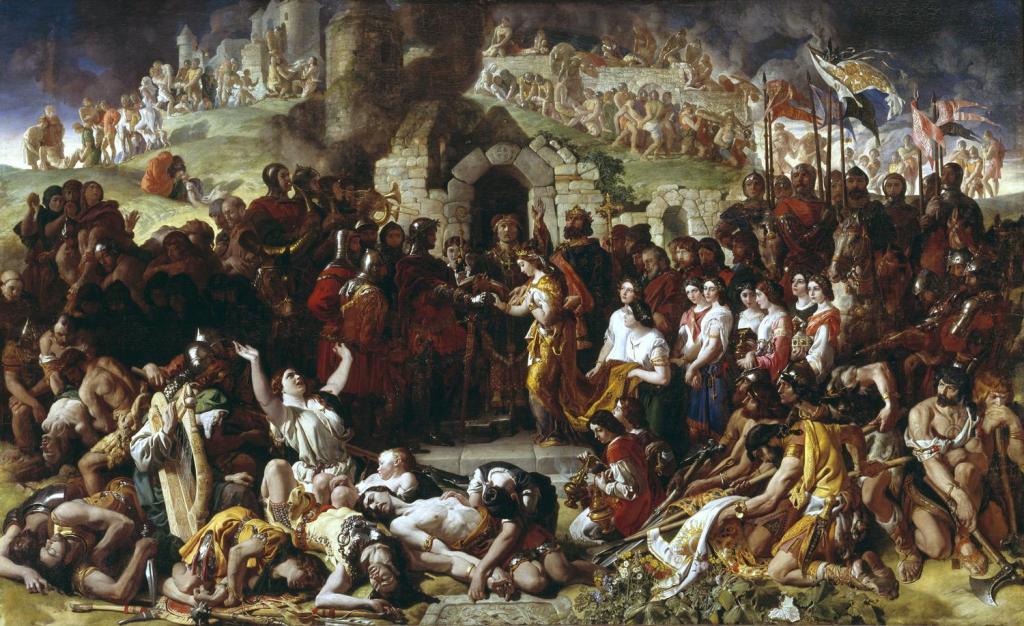
I learn more about the first centuries of foreign invasions at the Town Medieval Museum. Waterford played a major role in English power growth over Ireland until Henri VIII’s religious schism*, the port is absolutely loyal to the Crown, enjoying trades with the neighbouring island, and therefore, often threatened by Gaelic clans nearby. My imagination tells me foolish tales since I watch my dreamt boats sailing up the water from Bannow Bay and parting at River Barrow mouth. Some choses East and fight over Viking Vadrarfjordr**, some goes North and settle for the first time in New Ross.
I am particularly moved to be in Waterford, to walk this Ancient East, to wander over the lands which first knew English power over Irish Nation. I am utterly touched by the reproduction of Aoife and Stongbow’s marriage painting, without deeply knowing why.
I am surprised not to have given a chance to this place earlier… But I didn’t know then. I am told another story here: a region that perfectly gets along with this alien occupation. You can understand why colonization stood for so long, not everybody was rebel to the Crown in Ireland, not everybody raised to jeopardize the predetermined order. At least in the beginning. We shall not forget 1798 pikes men.
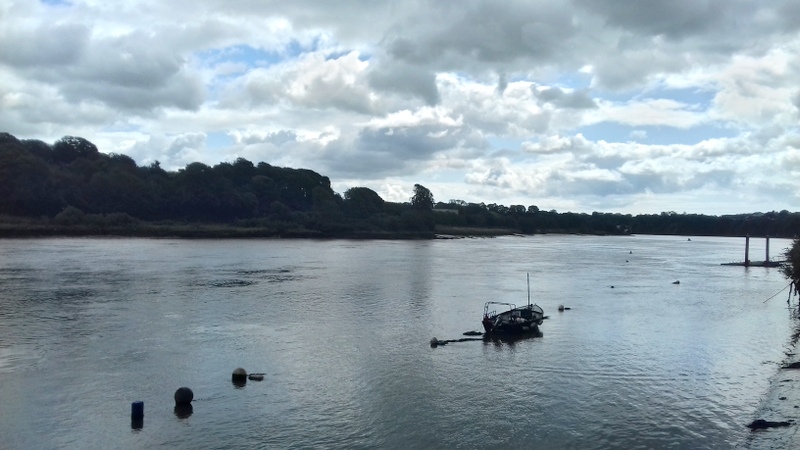
My last night in the South comes, blown by the outside storm. Rain is so light it is like a fog, danced with the wind. Such a storm to calm my uncertain heart, such a storm that sheds tears I don’t want to shed anymore.
I suddenly realize I missed one step on my eastern pilgrimage: Enniscorthy and the National 1798 Rebellion Centre. Three years ago, when my whole fever tended towards insurgent Irish moods, it would have been my first destination. Yet, today, because I stand in Northern Ireland not completely peaceful present, I focus on the Irish disease’s origin and I was utterly committed to the first invasion. Even if nothing happened like I planned with my writing. And I am a bit disappointed. And I try to think it is not a big deal, I followed fate’s stones throughout my immobile wanderings.
I’m driven over the whole island in one day to reach the North, I cross the invisible border even I can already feel Brexit’s effects… Rules have already changed, United Kingdom is not part of Europe anymore and like in any other non EU country, I must pay my extra fees for any payement. I’m in Derry which is not European Union anymore but still belong to the United Kingdom, while Ireland is part of one but not of the other.
I start to think I am done with my Irish island, I explored the last unknown place and even though Valencia Island, Kilkenny and Cashel remain secret, won’t be the copy of what I have already seen? Writing this, I want to soften my sharp statement. “I am done”. I am done with Ireland as a land of conquest, I am done with passionate love, I am done with doubts longing with the balancing phase. But I am not certainly done with my endless love, with my unbreakable loyalty. Now, I truly and deeply love Ireland, without cloud of glory, with all her inconstancies. I love Ireland for who she is and not who I would like her to be for me. I love her totally, I love her without compromises.
The last page of my first rocking-my-world-traveling-feeling is coming to an and, other lands are awaiting for me on the other end of the world, even if a small part of me will never return from Ireland.
I let myself to be blown by River Foyle, cradled by Peace Bridge, Inishowen in my eyes. Awaiting for my Icelander departure. Absent. Immaterial. Timeless. I am like a chrysalis hanging, apparently motionless, on a branch, fragile and mysterious. Like the chrysalis, I do absolutely nothing, except becoming who I am. I am changing, invisibly and internally, and when time will come, I will share it to the world.
* In the 16th century, Henri VIII initiates the English Reformation in order to marry Anne Boleyn, becoming Master of the Anglicane Protestant Church which is, of course, applied to slaved Ireland
** Waterford’s Original Viking name
July 2019 – GTM+1
 Fleeting Wor(l)ds
One thought on “Celtic Twilight”