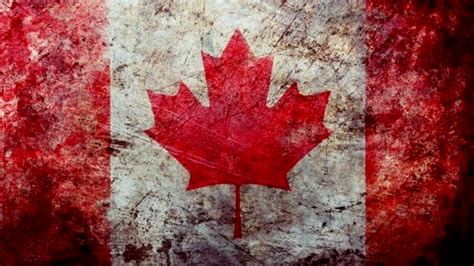
Through destruction and adversity, from the ashes grows the fire weed, the most vibrant bloom of the Yukon. Colonization was that searching and now we must be like the fire weed, who grows strong roots, who replenishes and who stop the erosion.
Fran Morberg-Green
First Nations
First proofs of life were found in Western Canada between 25 and 40 thousand years ago. Oceans’ level drop, waters freeze for thousands of years and build bridges in between continents, like Beringia for instance, only link between Eurasia and America, allowing people to cross those new passages towards new worlds. Yukon territories are part of this fleeting land and happen to be those prehistorical migrants’ first homeland, the rest of Canada being mostly iced. It is only later, around 16 thousands years ago, as the ice melts, that people head south. Current British Columbia sometimes becomes a home but more often just a pass by towards Southern or Inner lands. Thus, Canadian Prairies – current Alberta – welcomes their first settlement 8 000 years ago.
Then, the strait of Bering is flooded, the weather changes and this consistent migration flow ends; Western Canada starts to be built by its first people. Kutchin. Hän. Kaska. Tagish. Tutchone. Teslin. Blackfoot. Blood. Peigans. Woodland Cree. Chipewyan. Thompson. Tlingit. Tsetsaut. Tsimshian. And so much more. Always nomadic. Always moved.
Their way of life is often defined by where there live and the seasons’ rhythm.
Interior people works at a family scale, villages are indeed mostly composed of several families from a same clan. A leader is, of course, always in charge but no law forces people to follow his reign. He has to prove his knowledge and wisdom worthy of their respect every day. Thus, if a wiser figure appears, this person becomes the new head of the tribe. Besides, those clans are mostly sedentary, especially during winter time. Snowshoes are the only way of traveling since rivers are frozen and canoes useless. Communities are rarely in contact with the neighborhood. Daily life slows down with cold seasons and shines with warm times. One sails, one fishes and gathers for winter and everybody goes back to the winter settlement before rivers freeze.
Whereas on the coasts, communities are led by powerful chiefs in charge of economy, politic and ceremonial rituals. Their traditional clothes proves this empowerment. Dense forests and steep mountains make their travel difficult by land, leaving them with canoes towards the exterior.
But the pictures those tribes intertwine on lands is moving, First Nations are known for their nomadic way of life, by choice or forced. Thus, during the 9th century, a volcano’s eruption on the Alaskan border pushes Yukon Athabascans further south. And Great Plaines are completely transformed during the equivalent of the European Middle Age: first tribes, maybe tired of such difficult life conditions, leave while Southern communities peacefully wind throughout the Rockies. Algonquians. Sioux. Tsuu T’ina. Others came with war in their heart though… The Old World landed on the Eastern coasts, there are not yet in the Interior, nor in the West; but Shoshones, from Idaho and Wyoming, have created some contacts and are taming European horses. Therefore, their hunting lands grow to the Northern part of the Plains, oblivious of the nonexistent border between Canada and the US. And their foolish warship, always hungry for new prisoners, will fight until the first Europeans’ arrival in the West.
A nation is not conquered until the hearts of its women are on the ground. Then it’s finished; no matter how brave its warrior or how strong their weapons.
Cheyenne Proverb
Europeans’ arrival
The « discovery » of Western Canada by Europeans occurs around 250 years after Christopher Columbus’ landing on the American continent, 200 years after Jacques Cartier claims Eastern Canada for Francis 1st and as some American colony starts to long for freedom and independence. Explorers are mostly trappers or fur traders seeking for new trades beyond the unknown. They are also pulled by this unbelievable and timeless desire to find ways toward the Pacific.
Following a certain geographical logic, Alberta is of course, around 1730, the first province to be reached and according to legends, by a French man! Canada, then called New France, totally belongs to French people – easy to guess with such a name! – even if English have their own claim and are, like usual, ready to ask for more! And Alberta will apply to that rule, I would even say the area is the perfect symbol of drifted allegiance from one part to another: French, as official French settlers, won’t go further west than that.
Pierre La Vérendrye, or one of his sons nobody really knows, establishes a fur trade company directly helped by Alberta Native People. Of this partnership, often closed in a bedroom, is born a new ethnic group, specific to the province: Métis. Of course, both English and French settlers have already started to mix up with First Nations in New France, but this « mariage à la façon du pays* » actually becomes a thing in Canadian Great Plaines, true homeland for this new clan. White men – sometimes single, sometimes married in their home place – mix up with Native women, starting new families on this side of the Atlantic. Their children are mostly raised in the mother’s traditions but are also in touch with Western culture. Wives are the first link in between two communities, often used as translator, until kids have grown enough and, for the most, join the company as trappers or translators as well (some refuse this Western way of life though and follow the Native rules and traditions). Those Métis families, because they understand both opposite worlds, creates a real cultural bridge helping both with trades and assimilation.
Yet, two rival companies are established, the famous Hudson Bay Company (British Empire) and the North-West Company (Montreal), if the second acknowledges those marriages as being advantageous, the British Company condemns and even forbids it. Indeed, first English spouses are sent to Canada and Native concubines and Métis kids are forgotten. This unique and unperfect pattern maybe spreading great promises for a common Nation, because conquest and subjection are softened, because even English and French get along, is then terribly jeopardized: the idea of White Men above Native people is sadly confirmed. And the short partnership between French and English is reached by The Seven Years War coming from the East anyway. Used to be at war, their rivalries about fur trades monopoly completes the end of a mixed community in the province. French are soon sired by Quebec’s fall in 1759. Alberta becomes a perfect British colony, French Canada is definitely over! The French monarchy, defeated by the best navy in the world, quits its opportunities on the other side of the Atlantic, even if tireless Quebécois still resists to the invader!
As France stops playing war games in North America and as Alberta lets its wild roses put some roots down, a few British explorers, sure of their politic and economic monopole in this New World, push further away their wanderings, they travel beyond the Rockies and reach British Columbia, while Captain Cook lands on Pacific coasts in 1778. For four years, Spanish, soon joined by Russians and Americans, have been interested by the area; perfect mix for a furious fight. Arrived both by land and sea, British easily overcome in 1793, pushing away Spanish, making Russian surrender and finding a diplomatic solution with the USA.
Pacific First Nations’ lives are then completely set upside down by Europeans’ arrival. Indeed, once again pushed by their need of more furs, Western people are helped by Natives in exchange of food supplies for winter, making populations more dependent on settlers as time goes by. Only the coastal tribes, surrounded by natural ressources, keep their independence…. Until the second Gold Rush in the late 1850’s that, like any rush, pushes further and quicker what have already started to change. Besides, tribal traditions are completely transformed by the arrival of very patriarchal rulers. Especially when some Native society were mostly matriarchal and those women starts suffering a double burden: they are discriminated as women and as being Indigenous.
Yukon will be the last province to meet White Men. In the mid-18th century, fur traders, still hungry for more and probably limited by new BC rules (alliances between Native and European knowledge have increased fur trade in such an efficient way that a new law for beavers protection have to be established), reach Western Canada Northern Territories: the Yukon. Lands are deeply altered, but the most terrible repercussions will come later, starting with Klondike Gold Rush in 1896 to the railroad construction in Alaska during WWII. This period is considered for the Natives spared until then as the Yukon Dark Ages.
Canada
In parallel of those explorations further west in Canada, the British Empire is losing elsewhere one of its most powerful settlements: the US become independent in 1776. The American-Canadian border is drawn in the East, putting loyalists in the North and Republicans in the South, Canadian lands being the safe haven for those still loyal to the Crown, defining their only goal: « We are not Americans!”. The settler’s identity is then built opposed to another, without a real specificity, only to stay on the king’s side. But the US are stubborn and Canadians are not sure on what side they stand: the war of 1812 when Americans try to invade Canada and 1837 Rebellions question, in vain, colonial British rules.
Despite its desire to stand apart, Canada goes through the same kind of changes as the US during the 19th century.
Gold rushes (Fraser (BC), 1858 and Klondike (YT), 1896) are, like often, first responsible. People need new means and the railroad digging the Rockies with Chinese immigrants’ blood, flexible and underpaid workers, is built. This new transportations brings even more minors seeking for wealth, even if life conditions get harder the deeper you get in the Interior and a lot surrender without what they were desperately looking for in the Earth’s cracks.
If it doesn’t fulfill everybody’s wishes, digging for gold opens new economic opportunities in mining industry (copper, coal, etc..). And the development of this industry completely transforms daily life: it is not fleeting settlement anymore, people actually settle for good, cities sprout, women and children come with the minors.
Yukon is the best example: so wild until then, not really under British rules; but with prospectors’ arrival, « cities » spread – a lot of outposts like Fort Reliance (now Dawson City) and Forty Mile are created – and the territory officially becomes part of the British colony; until it is completely abandoned despite other mining industries, wounded and changed forever, once gold dreams fade away.
As the Gold Rush glows and burns, other economic sectors grows. British Columbia’s forests are ideal for logging and timber, when Alberta focuses on agriculture. But Great Prairies’ tough weather doesn’t attract… A big campaign starts then: English speakers from Eastern Canada or United Kingdom, or even from the US, are the most praised, but unsuccessful, the government settles for Central Europeans, especially Ukrainians, to inhabitate those inhospitable lands.
Yet, the biggest change is politic. Indeed Canadian provinces confederate, British-Canadian nationalism seeks to unite the lands into one country, dominated by the English language and British culture, bitterly accepting the Québécoise exception. Thus, July, 1st 1867, Canada becomes a British dominion**, Canada becomes its own country. This confirms settlers’ power over First Nations and buries forever the continent Natives have built.
Settlers evangelize. They seize lands to trade timber and ranch cattle, in a word to help their own exploitation of the land. They kidnap Native children to send them to Indian Residential Schools and arrest parents who are opposed to this process. They excessively hunt species essential for Native survival. They introduce alcohol, they give disease. First Nations are decimated, people lose their identity, their language, their culture. And a whole legal system is in place to justify those behaviors. Entire villages are alienated from their birth communities, send to reservations, living under special laws.
Some only have war left to defeat this British plague – Métis Rebellions in 1869 and 1885 for instance – but, hungry, sick, grieving, tribes soon only have alcohol left to bury their wounds.
One or two Indians die nearly every day; but what is an Indian’s life worth? Not so much as a pet dog’s, to judge from the cruel apathy and stolid indifference they were allowed to rot under to the every eye – not to mention olofactories – of those who sacred duty it was to have comforted them in their hour of misery.
Article about the small pox epidemic in Victoria (BC), 1862
The 20th century then sings its war anthem, all across the world this time… and Canada proudly joins the fight during the Great War. This war allows the country to truly find its identity and to develop a British Canadian Nation. At the end of the war and for the first time, Canada claims its own official in the newly born world organization, mother of the current UN, people wouldn’t accept to only have an imperial one.
The 20th century then sings its war anthem and Canada takes part in universal horrors. When WWI starts, the government is defiant towards European migrants arrived 50 years before, they are now considered as enemy. 8 000 citizens, mostly Germans, are put into 24 camps across the entire country between 1914 and 1920. They build roads throughout National Parks giving us the opportunity to wind along beautiful scenery today! Some people think indeed that it would be a shame not to keep them busy and because all budgets were cut due to warship, they plainly take advantage of these cheap workers. Weather conditions are awful during winter time, work conditions are unbearable during summer time (they have to make it up for lost time during the cold season!) and the Otter Camps, nearby Emerald Lake (BC), starts a strike during summer 1916. The headquarter decides to close the camp, send prisoners elsewhere and forget about them once the war is over, once they are free and unable to talk about they went through for six years.
The in-between war confirms what Canada started during the Peace Treaty conference in 1919, the country really wants to get free from British rules. The Statute of Westminster in 1931 thus almost gives a legislative autonomy, utterly achieved a few decades later in 1982.
And WWII wants to have a word, Canadian armies help to save Europe from hell. The country is on every side and gets closer to the US in order to show its final rebellion towards the UK: following American example and as a support, they put their Japanese residents in camps fearing for spies and sabotages.
And the world pretends to be at peace during the Cold War. Canada digs for another kind of gold, darker and more liquid. Canada stands on the western side, closely tied to the US, sending troops to Korea, being alienated from Europe by the Suez crisis, torn in between two main identities people can’t chose – British or American ? –, various others people have forgotten.
And the sixties arrive… Canada adopts its red maple leaf flag. Quebec starts its quiet revolution claiming its independence. Western Canada feels alienated by Central government decisions, not suitable to Western Canadians. Western Native tribes also go through a tragic and necessary turning point of their colonized history. In one hand, thousands of kids are taken away from their parents and sent to the “Schools of Sorrow” during the sadly famous “sixties scoops”. In the other hand, some Yukon leaders brings at the center of discussions First Nations’ rights.
By the late sixties and in one century, most of Yukon tribes have lost their culture, their language and their traditions. Native people is deeply traumatized in both its body and soul. It is around this time that a network of pipeline is proposed and approved to snake throughout the territory. Formalized First Nation consultation doesn’t exist at that time, in Canada or elsewhere; pipeline are going to be built and once again, the Yukon population ballooned. Against all odds, this project awakes a revolted wind, an unprecedented union throughout very different ad spread tribes. A common voice stands, precious struggle tool, and is heard during the famous 1977 discussions between fife Yukon leaders and the Prime Minister Pierre Elliot Trudeau. A conversation that simply starts out about the pipeline ultimately becomes a conversation about First Nations way of life and a declaration for autonomous self-determination. For the first time, Nations talk to Nations, grassroots leaders talk to federal politicians, hunters talk to layers, elders talk to youth, community members talk to bureaucrats. For the first time since the Europeans’ arrival in Western Canada, people talk to each other.
Mr Prime minister, just because we don’t want a pipeline doesn’t mean that we want to be backward, it doesn’t mean that we don’t want television or telephone.
Yukon leader
From there, born in this huge Northern Territory, a recognition process of First Nations and land redistributions extend to the rest of Canada and achieve with the “Umbrella Final Agreement” in 1992. In parallel, IRS close and are totally forbidden.
This agreement doesn’t change Canada in one day though, minds take a while to be truly transformed, memories take decades to heal… On a politic level, land redistributions and self-determination are still being discussed today. On a social level, Native communities identities try to redefine themselves through art, reinventing their myths and their gods; they may find a way home, even if a home like before the colonization is impossible to reach….
It is only in 2008 that the Canadian Prime Minister Stephen Harper officially apologizes for all the kids sent to IRS and more broadly for how the First Nations have been treated since the European settlers’ arrival. Discrimination (on both sides!) against Métis start to be remembered. Sorrows induced to another people and unequal society construction starts to be remembered. Canada finally accepts what it is: a curious and sometimes sore melting pot. Used to blame American behavior for its racism and discriminations, Canada starts to feel the beam in its eyes instead of focusing the mote in its neighbor’s.
Therefore, despite its smooth and nice look, Canada seems to have to deal with its own skeletons in the closet…
The Nation have met its biggest challenge for the last 50 years: standing with its own diplomatic, social, economic and politic identity in front of its noisy neighbor. Canada may know be proud of being a wonderful land of refuge for the rest of the world, an ideal compromise between Europe flabbiness and America hyperactivity and thus THE quiet strength of North America throughout the world. But like always, as soon as you dig a bit, you realize the country has big work to do to heal its roots, especially in the West – First Nations claims, to heal its present, especially in the East – Quebec claims…
And Canada, to make its task harder, tends to deal with it the British way: by putting a piece of tissue above, forgetting about it and hoping for the best! Yet, if some have forgotten and some have kept it quiet for a while, everybody seems to remember now, you can feel an electric tension in some places, and Canadian society, so proud of not being American, seems to suffer same traumas. More vicious though. Because they have been buried in limbos for too long.
* Marriage according to the “custom of the country.”
** Dominion : a self-governing nation of the Commonwealth of Nations other than the United Kingdom that acknowledges the British monarch as chief of state
PS
After reading this post, I realize, surprise, how hard I am towards the History of this country – or more exactly a part of this country – that I love so much. My Frenchy heart might be speaking for me, since English stole this New World mostly from the First Nations but also a bit from the French ;)? I then apologize the beam in French History’ eyes that I don’t mention here – because it is not its place – and that really has nothing to envy to England in terms of blindness and inequalities. I then precise I write here about a whole and not individuals. I generalize and take short cuts. I write about history and not all the tiny and beautiful individual stories. I transcribe my last bitter feeling. From what I heard, read, felt. I tell from this unbelievable revelation: Canada truly acknowledge First Nations a decade ago and official bad treatments still occurred when I was born. And I question, I understand, I get lost… The East gave me another taste, so far from the pre-European period. The West is so vivid of this wounded history, maybe, unlike the East Coast, there was never here any official wars between settlers and Native, only a vicious and powerful takeover. Then, I question, I understand, I get lost… And I hope, naive and optimistic, this late recognition will heal memories and History, that what have taken so long to be done by the government started way before in between people; that migrants from yesterday or millennia ago intertwined their lives without a stupid state validation.
 Fleeting Wor(l)ds