The Land of the Cathars is full of mesmerizing legends and history for my child’s eyes. I vaguely remember to have visited some castles with my dad (I even got a Knight diploma!) and my mum has always nourished an unbelievable passion for Cathars, which probably goes through family then.
Yet, like a lot of my homeland’s realities, I have taken some distance for the past few years, looking for foreign mysteries on Celtic lands, forgetting my own had some unfathomable secrecy of the Beyond. This half obligated – half chosen immobility has therefore some good and opens everyone to some hidden opportunities.
As for me, it reconciles me with my childhood castle dreams that I might now gaze at with my historian apprentice’s eyes and my imagined witch’s soul.
As for me, it brings me towards this fantasized quest and leads me to the most legendary places of all, to the most mysterious lands of all, to the most secret constructions of all, through my new category: The esoteric and telluric Aude.
In this idea, it is quite normal to start with the queen of mysteries, with the hazier of all and share my escape to RENNES LE CHÂTEAU, high mystical place of the area!
Before going to Rennes Le Château, I have heard and read a lot about it… watches that stop, car accidents, etc… I was therefore prepared for an electrical shock similar to a night of Samhain, a day of Beltaine, Jesus Christ’s Resurrection and Mahomet’s arrival in one! I must confess I was a bit “disappointed”… Let’s say, either I was sealed that day, or energies were very subtil and did not effect me (or will in a very long time), because I didn’t feel anything! Maybe the wind had blown any receptivity away, or the touristic season had jammed radars, or it was just not my day…
Despite this nil, I was very happy to discover this little hilltop village with my mum and my two sisters – I truly believed it was part of my own initiatic journey started four years ago – and I am now very to share its riddle with you.
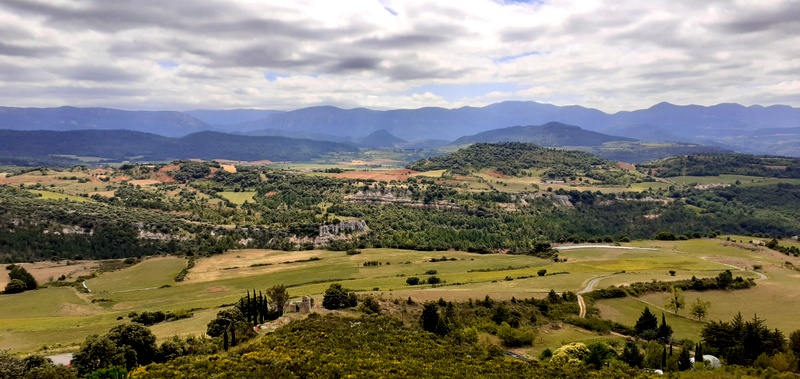
Rennes-Le-Château has been inhabited since the beginning of time: prehistorical people were here, like many excavations have proven. When history swung to Antiquity, the village becomes a Celtic people’s – the Redones – refuge which make Reda the capital of their Pagus Redensis. Romans as well pass by the Gallic oppidum, erasing Celtic ruins, even if they use the place only for watching tours (and we understand them when you glimpse at the view!).
During the second half of the 6th century, as Wisigoths are fighting their own war in Gaul and are finally chased out of Toulouse by the Francs, the old oppidum of Rhedae welcomes the collapsing German people, making the village a strategic place to control the Pyrénées. But South is definitely not a good place for Germans to live since Saracens get rid of them from behind. The high rock then gets back to French hands after Charlemagne’s reconquest.
Why on Earth this Wisigoth detail would you say? I might directly go to the big mystery lying under Rennes and spare you my French history! But this Wisigoth detail has its goal, I am not just being talkative, I swear! Because Wisigoths would be the first owners of the legendary treasure hidden in Rennes (which for a strange reason reminds me of the unreachable Gold of Toulouse), that I am about to write more about.
First, a slight detour though, which also has its purpose later on.
After Charlemagne’s reconquest, the area is controlled by earls, the village is very powerful. But as early as the 10th century, argued between Carcassonne Earls and Aragon ones, Rhedae starts its slow decline which will rise when the place is entirely destroyed by the King of Aragon in 1170.
A few decades later and during the next century, the place suffers the Albigensian Crusade of course, even though there are no archives about it; it was indeed taken by Simon de Montfort’s troups, definitely ending its radiance.
I skip ahead 16th century religious wars, the castle destruction by Protestants and the new leading by Hautpoul Family. Let’s be foolish and talk about the unbreakable bond between the village and Mary-Magdalene proved by Bérenger Saunière’s reconstruction of the church.
For those who have forgotten, Mary-Magdalene was one of Jesus’ followers, recently and officially acknowledged by Rome, particularly by making July, 22nd Saint Mary-Magdalene’s Day. She is supposed to be a confusion between three different women, Mary of Magdala (meaning “Tower”), Mary of Bethany (meaning “Ann’s home”) Lazarus’ and Martha’s sister, Mary-Magdalene the “loose woman” who cleaned Jesus’ feet. What we know for sure is that she attended the Crucifixion and was the first to witness Jesus’ resurrection for Easter.
The legend tells then Mary-Magdalene sought refuge in France after landing at Saintes Marie de la Mer. Some scholars even pretend Botticelli’s The Birth of Venus would be a symbolic picture of her arrival. She would have lived in a cave for 30 years in Sainte Baume Mountain as she was preaching throughout Provence. When she died, she is supposed to have been buried at Saint-Maximin.
But this version is challenged by some, Mary-Magdelene would actually have settled and been buried elsewhere. At Rennes Le Château for instance… As a matter of fact, Pierre Plantard, Le Serpent Rouge‘s author, wrote about his quest for the mysterious grave across Cathar Lands to defend this theory.
If Plantard published his fantasies, the Abbot Bérenger Saunière, as a Church Man, printed them in stones. The building was first Rennes’ lords’ chapel, it then became the parish church, renovated at the end of the 18th century by Saunière himself with mysterious funds which made (and still do now) headway back in the days. All assumptions have been made throughout years: did the Abbot find the Devil Gold hidden in Blanchefort Mountain or did he discover the lords’ sepulcher’s gate mentioned in the town’s archives but nobody has ever found, or was it the aforementioned Wisigoths’ lost treasure, or even the Knight Templars’, or just the Cathars’? No one has ever found an answer, even Saunière’s trial in1910…
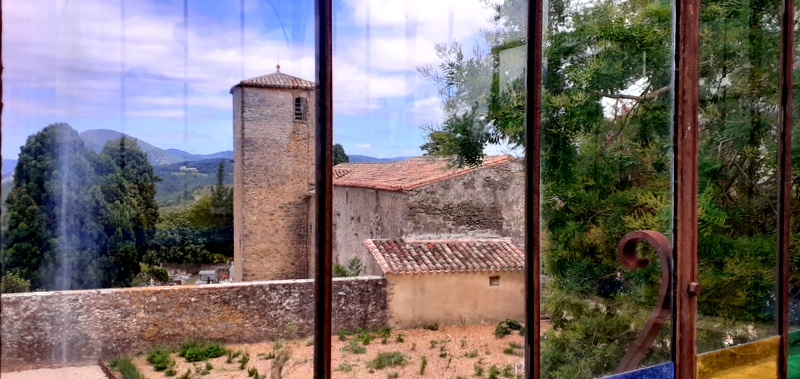
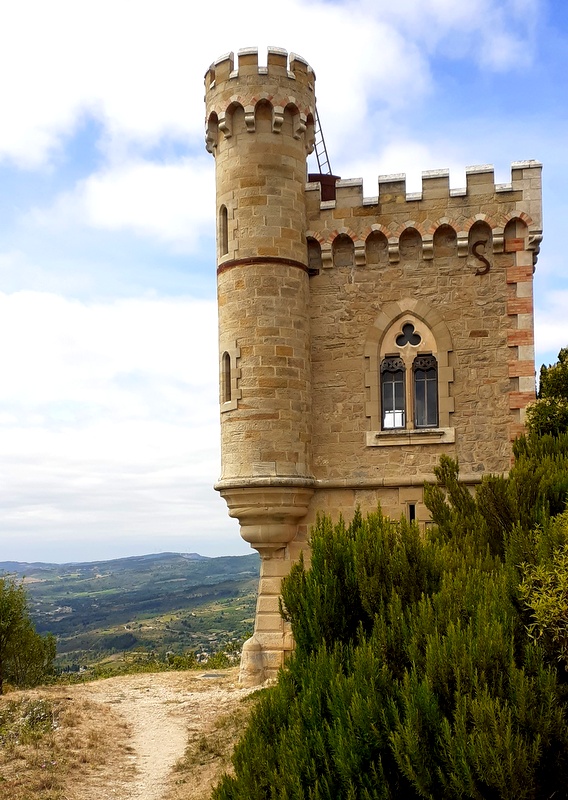
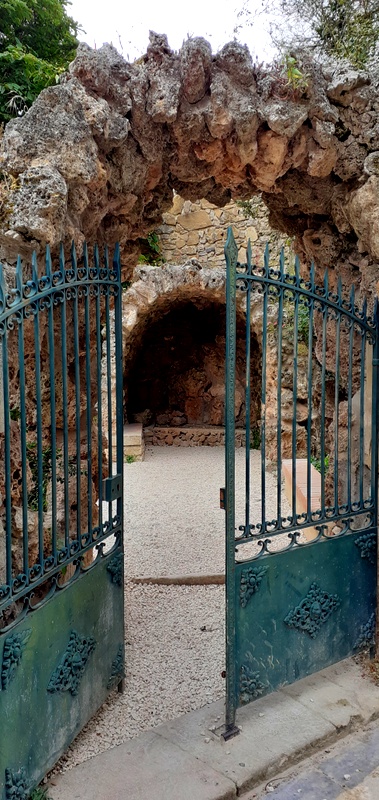
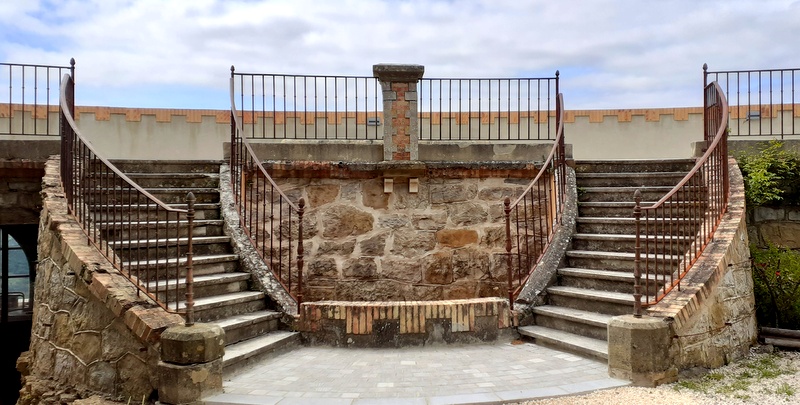
The church dedicated to Mary-Magdalene is full of riddles in itself, the most surprising being the Demon guarding the gate. Actually, the whole village is a sweet prayer to the Saint: Saint Mary-Magdalene Church, Bethany Villa where he never lived and that he left for his “housekeeper” (their relationship caused a lot of ink to flow…) and Magdala Tower, where you access through 22 steps and gives you a giant view of the surroundings; from this Tower, the Saint is supposed to appear to whom is meant to in order to reveal the actual location of her grave which would guard the real treasure… The Abbot might already have found it, which would explain the whole place: he would have discovered an encrypted document in 1885, proving Mary-Magdalene is the Holy Graal and that she would have carried the ancestor of the Merovingian dynasty; the piece of paper is also supposed to uncover the real relationship between Jesus and Mary-Magdalene.
That hidden truth would actually be, according to certain legends, one of the Cathars’ secret belief and the real reason why they were slaughtered by Rome.
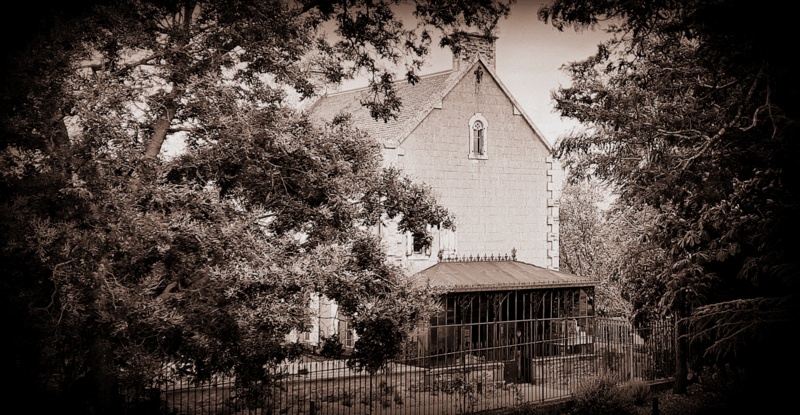
You got it, Rennes Le Château is a place where History and Legend intertwine without ever telling the whole story… Hundreds of gold digger came during the 1960’s in order the find Saunière’s treasure’s leftover, leading a real treasure hunt thanks to presupposed clues he had left in his church. There were so many of them, the city council had to forbid any kind of digging in town… They are crazy the Gauls!
Today, the village’s unsolved and legendary secrets still bring an endless quest for truth whose energies lie in Rennes’ ground and vibrate through stones, blended with Bugarach Mount’s polarity nearby, a all mystery in itself, host of my next adventures…

PS: If those mythological tales have made you hungry, you should read Kathleen McGowan‘s novel, The Expected One. Her words made me travel through Rennes Le Château’s mystery more than when I hit its streets for now.
 Fleeting Wor(l)ds
Hello.
We have been to Rennes! Wonderful place. Did you know that Rennes means reindeer? Here is the evidence in my post:
Reindeer2 are curious
Have a wonderful day!
LikeLiked by 1 person
I hope you liked Rennes le château. Being French myself, I do know “Rennes” means reindeer 😉 but in French, it also and mostly sounds quite close to “reine” which means queen and I actually played with my words on my French article
LikeLiked by 1 person
Coucou Justine.
Avez-vous lu mon commentaire supplémentaire concernant Rennes? Je l’ai écrit hier en racontant notre “aventure de vacances en Bretagne”. J’espère que vous ne l’avez pas vécu comme négatif, car j’aime la France et sa belle langue. Dans ce commentaire, j’ai également donné deux liens. Presque tous mes articles en français également.
Je vous souhaite un agréable weekend!
Matti
LikeLike
Bonjour Matti,
Je suis allée voir votre article sur les Rennes et je n’ai pas du tout été vexé par votre commentaire, j’ai simplement trouvé ça cocasse que vous me le traduisiez 😉 Belle continuation à vous ! Justine
LikeLiked by 1 person