The Land of the Cathars is full of mesmerizing legends and history for my child’s eyes. I vaguely remember to have visited some castles with my dad (I even got a Knight diploma!) and my mum has always nourished an unbelievable passion for Cathars, which probably goes through family then.
Yet, like a lot of my homeland’s realities, I have taken some distance for the past few years, looking for foreign mysteries on Celtic lands, forgetting my own had some unfathomable secrecy of the Beyond. This half obligated – half chosen immobility has therefore some good and opens everyone to some hidden opportunities.
As for me, it reconciles me with my childhood castle dreams that I might now gaze at with my historian apprentice’s eyes and my imagined witch’s soul.
As for me, it brings me towards this fantasized quest and leads me to the most legendary places of all, to the most mysterious lands of all, to the most secret constructions of all, through my new category: The esoteric and telluric Aude.
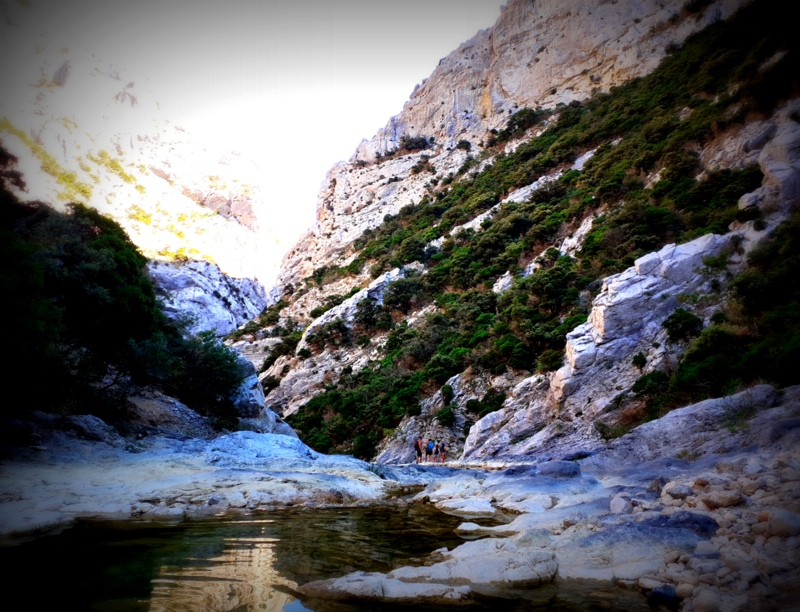
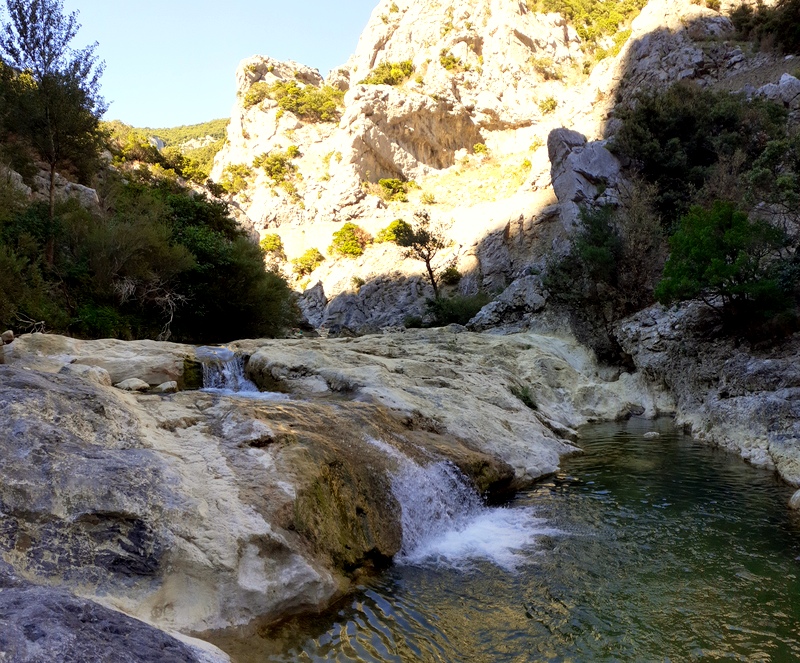
And GALAMUS, this alien name strangely sounding Indian; and GALAMUS, this rocky and unbelievable being, cut by the Eagle River, sculpted by ages, hid unspoken secrets when I came, blended in hundreds of swimmers trying to escape heat waves in between those white and immortal rocks. But GALAMUS has so many immemorial stories to tell, I will invent some for you here…
Everything began, at Galamus, thousands of years ago… As waters were not named yet, as rocks were not cut, as the Earth didn’t know who she was. Nothing had a name, Everything existed out of limiting human meanings. There was no invisible border in the middle of the wild steam flying closer to heaven, the place was apparently unchangeable.
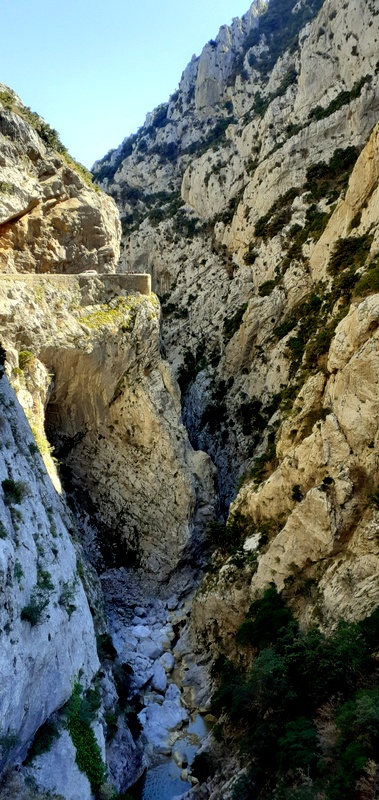
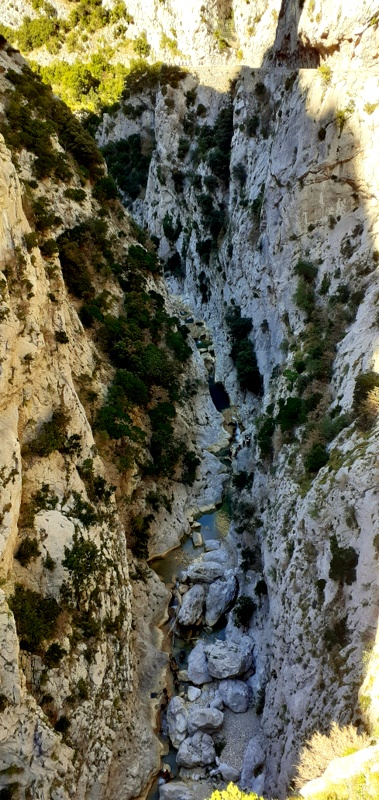
Although Agly waters dug second after second, thousand of years after thousand of years, its bed’s mineral soil and sunk deeper to the heart of the Earth. Today, its masterpiece keeps going five hundred meters down hill, offering a majestic scenery, whether you gaze above or under, head in the clouds or feet in water.
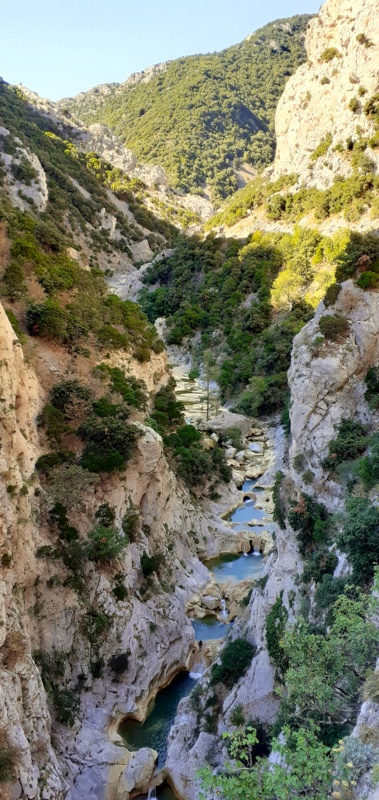
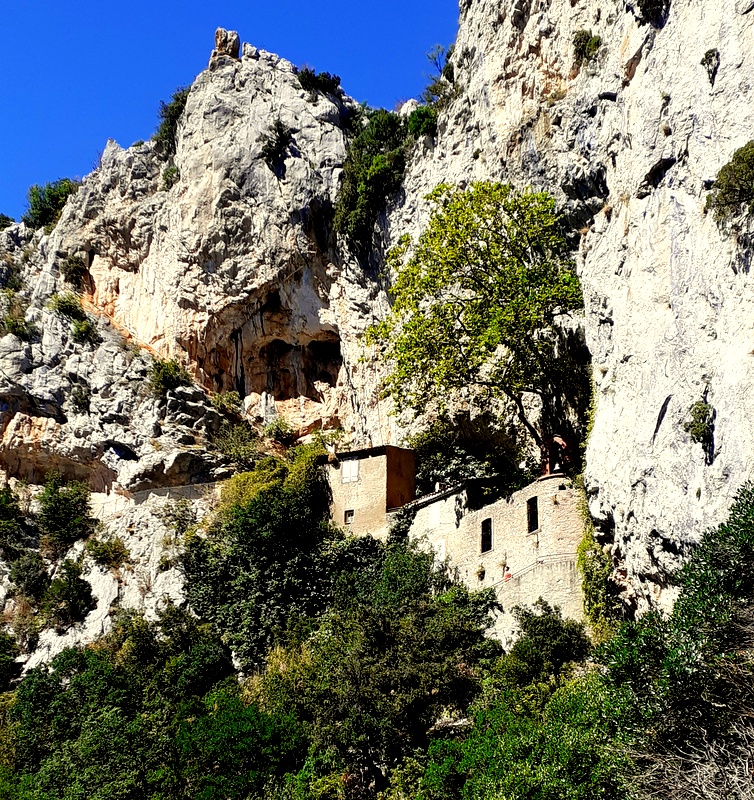
First to challenge this end of the world feeling were hermits came to retreat in the canyon’s natural caves around the 7th century, even if walls and history have forgotten… First simple cave, the place has changed through centuries and ascetics, and was put under the care of St Anthony the Great. Indeed, Anthony of Egypt is considered as the father of Christian monastic life since his quest of Absolut threw him in the desert to meditate. He established his own hermitage on the Mount Qoizoum, near the Red Sea.
Following the example of their patron saint, successive hermits (among which were found Franciscan Monks) retreated into one of the cliff’s natural chamber with a mesmerizing and meditative view, and started to build some human walls in 1395. However, the true consecration happened in 1782 when a few inhabitants of Saint Paul de Fenouillet were saved from a sweating disease outbreak thanks to St Anthony’s protection. The cave then became a chapel to commemorate the “miracle”.
Left after the French Revolution, the Hermitage was restored in 1843 by Marie-Joseph Chiron, Franciscan priest and monk, renamed Father Marie. He lived there for a few years, celebrating Easter and Pentecost processions, and started the Wishes Bell’s ritual; indeed, legends say the bell grants the one who rings it’s wishes, especially when it comes to marriage…
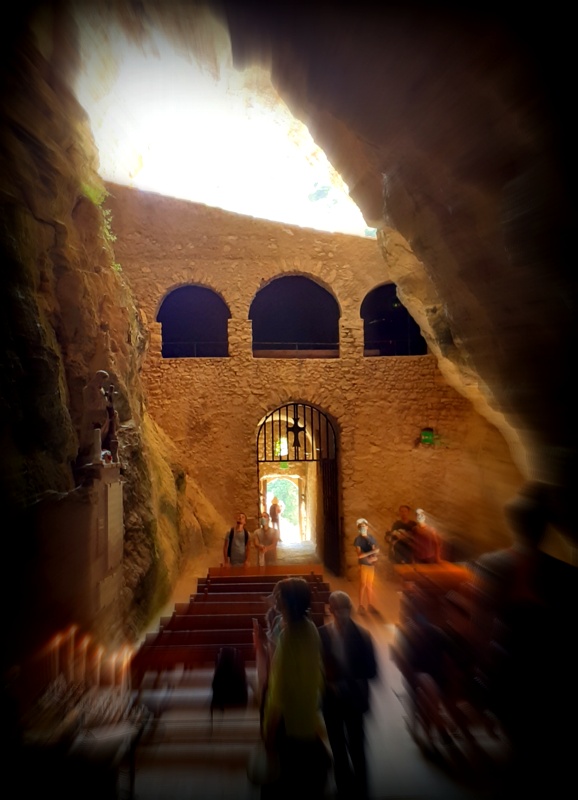
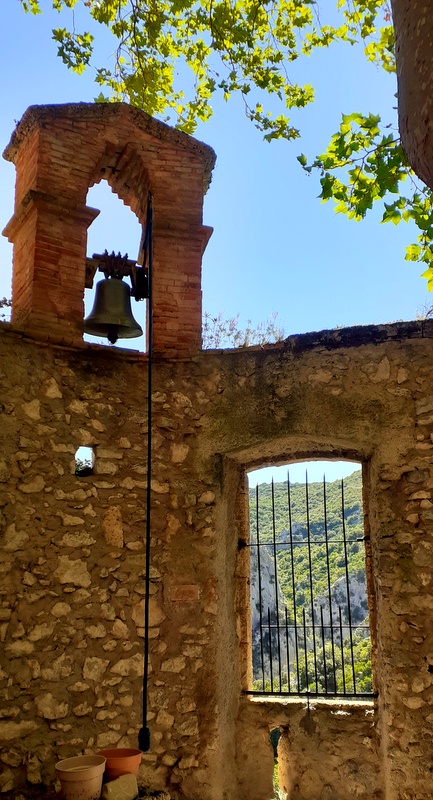
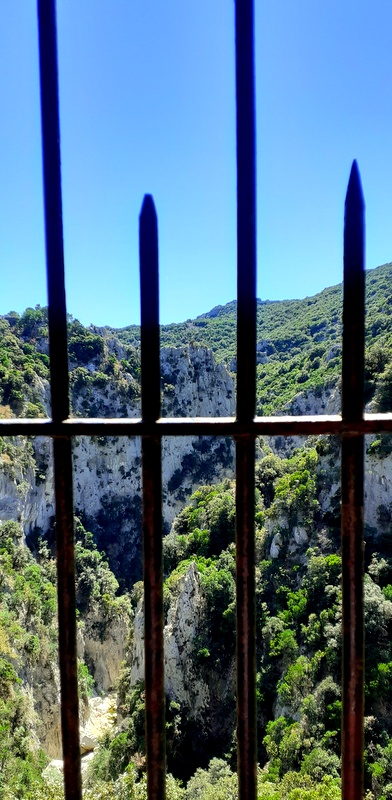
But enough of dogma! Why does this place actually has such a puzzling aura? Because, once more, the emblematic figure of Mary Magdalene, the patron saint of Rennes le Château, protect this den’s spiritual walls since she is the first to greet us nearby Virgin Mary above a baptized source.
In facts, Galamus’ esoteric effect might as well stop here, like a soft secret whispered in your ear and let to your own interpretation after such a fleeting visit…
Some pagan contemporaneous have started their originel quest towards matrix waters there. And the entrance like a neck of the womb does invite you to such a journey, throwing you under the Hermitage’s huge plane tree (when you arrive from the Hermitage Parking lot). And pure swell gazing from under does call us for a new baptism.
As for me, I won’t write more about the both sacred and profane pilgrimage you might start there. I have read too much myself and want to let everybody create its own pagan ritual, whether he wishes or not…
How to visit Galamus Gorges and Hermitage?
To get there:
* If you arrive from “North” through A61: take exit #22 – Bram (if you are coming from the West) or exit #23 Carcassonne West (if you are coming from the East), direction Limoux. Arrived there, you migh either follow the main road: D118, D117 direction Saint Paul de Fenouillet and driving up the narrow D7; or for the scenic road (but extremely narrow) – with even a little and esoteric road trip Rennes le Château, Rennes les Bains and Bugarach through D613 at Couiza and then following D14 to Cubière sur Cignoble where you will catch D10, along tortuous La Sals waters.
* If you arrive from “South”: follow D117 direction Saint Paul de Fenouillet and take D7 once you get to the village.
Visiting by car:
It would be a shame to only drive through but as a first glance, it is already absolutely incredible to sometimes seize a sparkle of water in your mirror, to follow rocks’ meanders in your window, while (wrongly) skiping the walk’s vertigo.
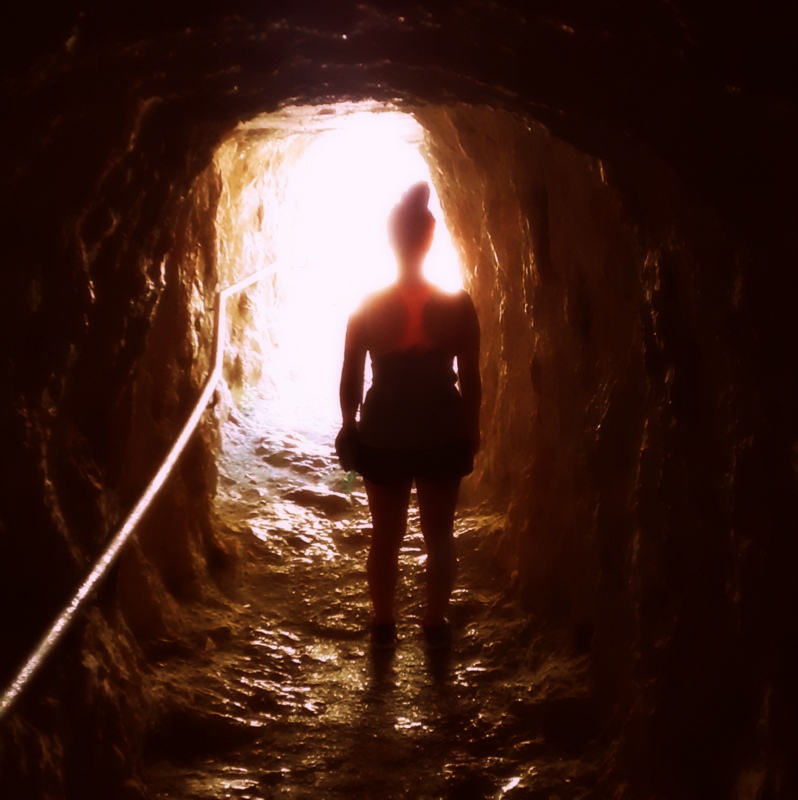
The road in itself stands for human ambitions and achievements, it was built at the end of the 19th century, cut with crowbars by a few minors hanging on ropes. Beyond economical reasons – helping goods’ journeys in the area -, it was also about those gorges’ challenge to human race. The road was finished in 1892 with the tunnel and the technical feat was immortalized by Léonce Rives’ poem, engraved above the underpass.
Dins aquel roc pelat que trauco la sabino
Oun l’aglo dins soun bol gausabo soul beni
Penjat per un courdel ambe la barromino
L’home coumo l’ausel a troubat un cami.
In this pealed and pierced rock
Where only the eagle dared to come
Hanging to a rope and with a crowbar
Men like birds has found their way.
Visiting by foot:
* For the cautious ones, you might try the short walk to the Hermitage (45 mins) with nice overlook of the canyon. I advice to start by the Hermitage Parking lot if it is not overcrowded yet, but it is also possible to start by the Overlook Parking lot. That stretch of path (between overlook and Hermitage) was for a long time the only way to access the chapel.
* For the “lazy” ones, you might walk the aforementioned road in order to gaze at every detail. And in this case (if you arrive from North), I would advice to park your car at the Parking lot #4 so you don’t “spoil” your surprise driving through.
* For the reckless ones, you might hike a 5 hours and 13 km path starting by Cubières Mill (a stretch is also on the aforementioned road), following yellow and blue markers (French brochure here).
Visiting by flipper:
Geared with your wetsuit, you do part away from the pilgrimage I was mentioning earlier… It is a beautiful way to sink into those mesmerizing and regenerating mineral water though.
I strongly advice to book with the small family business Côté Sud: discovery offers for starters and sportive offers for the most agile, all that with a cheerful smile.
Good to know:
* If you want to swim without a wetsuit, avoid the stretch between parking lot #4 and the overlook Parking, and chose Aude part of the canyon, less risky in term of landslide. Indeed and as my careful little sister would say, interdiction signs are here for a reason: every day, more or less big rocks fall and will smash any swimmer on their way… Then, do not think (like me) you are being bullied in your freedom and instead of taking a risk on the narrower part of the stream, choose the sunny (and authorized) beaches’ smoothness above.
* The Guest House Le Galamus, in Saint Paul de Fenouillet, offers a comfortable and cheap shelter 10 mins drive from the canyon. Shared bathroom, Breakfast included and self-catering kitchen (which is the best thing you could dream of when you take a look at feeding options in the village).
* To eat by night, two words: be prepared! Because, for a us, it was a bitter disappointment. We naively expected the closest village to such a touristic place to have more options. We forgot too soon the peculiar Catalan mood…! Mark my words, it is impossible to eat at Saint Paul de Fenouillet after 9 pm !!! Take away pizzas are out of pizza dough (or more likely don’t know us well enough to be willing to feed us), the restaurant – whose indoor room is absolutely empty – has too many booking and can’t set us (but won’t be against getting laid) and the only snack bar that would eventually greet us has a very bad reputation among locals (food poisoning for instance). I am not used to be so sharp, but I am telling you I highly don’t recommend Saint Paul by night! Just go to the grocery store and cook yourself a royal meal at the guest house.
But I won’t end with a negative pinch, and will bow to the magic of Saint Paul de Fenouillet which randomly crosses our way to one of my mum’s friend’s. He invited us for cheerful appetizers and happened to be serendipitously be the father of a beautiful carpool encounter three years ago.
When I wrote there was something prodigious in Galamus waters…
 Fleeting Wor(l)ds
One thought on “Galamus’ secret”